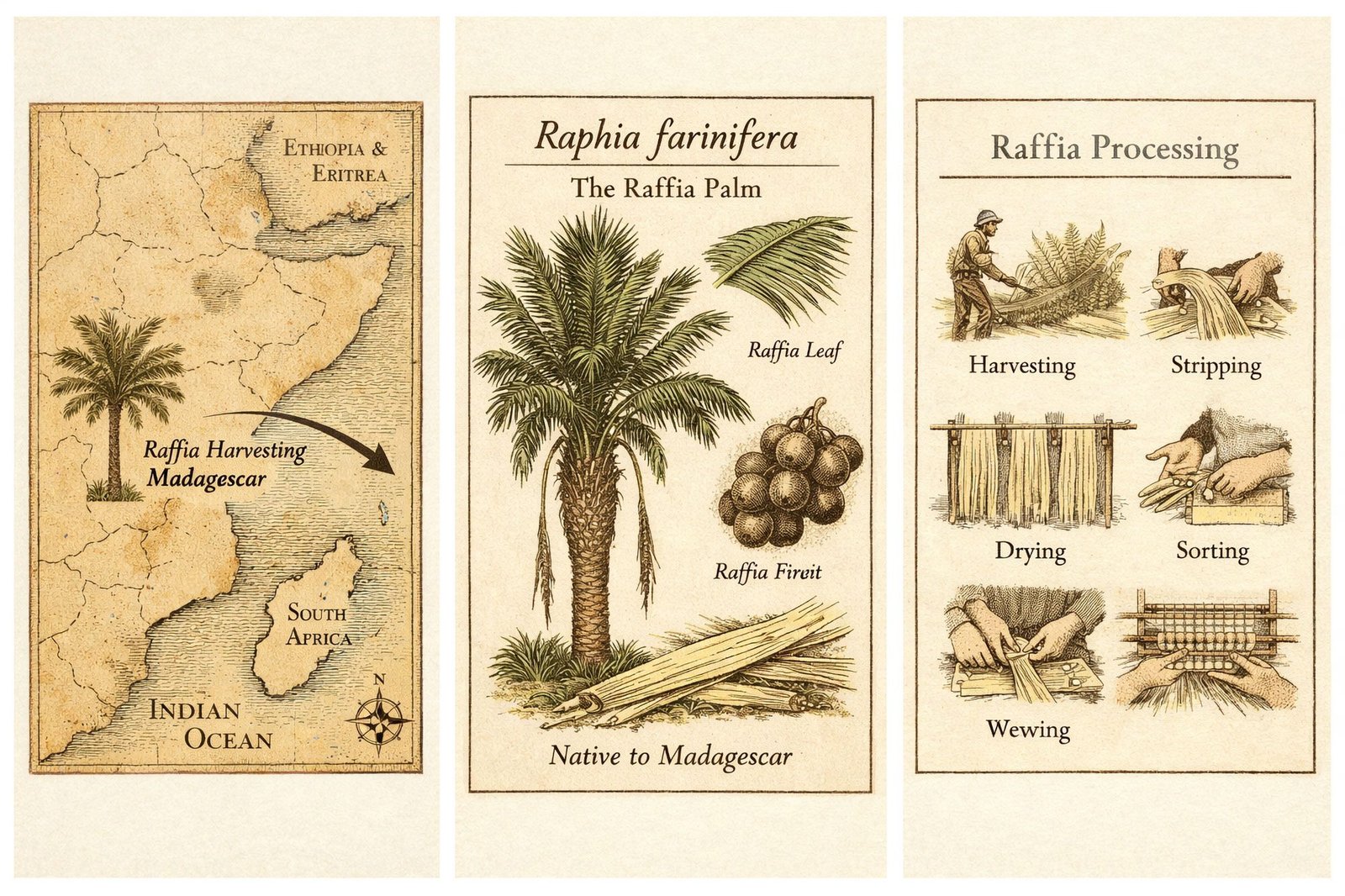
In Madagascar, raffia does not begin in a showroom or a trend report. It begins in wet ground, at the edge of water, where a palm grows slowly and gives up only a few leaves each year.
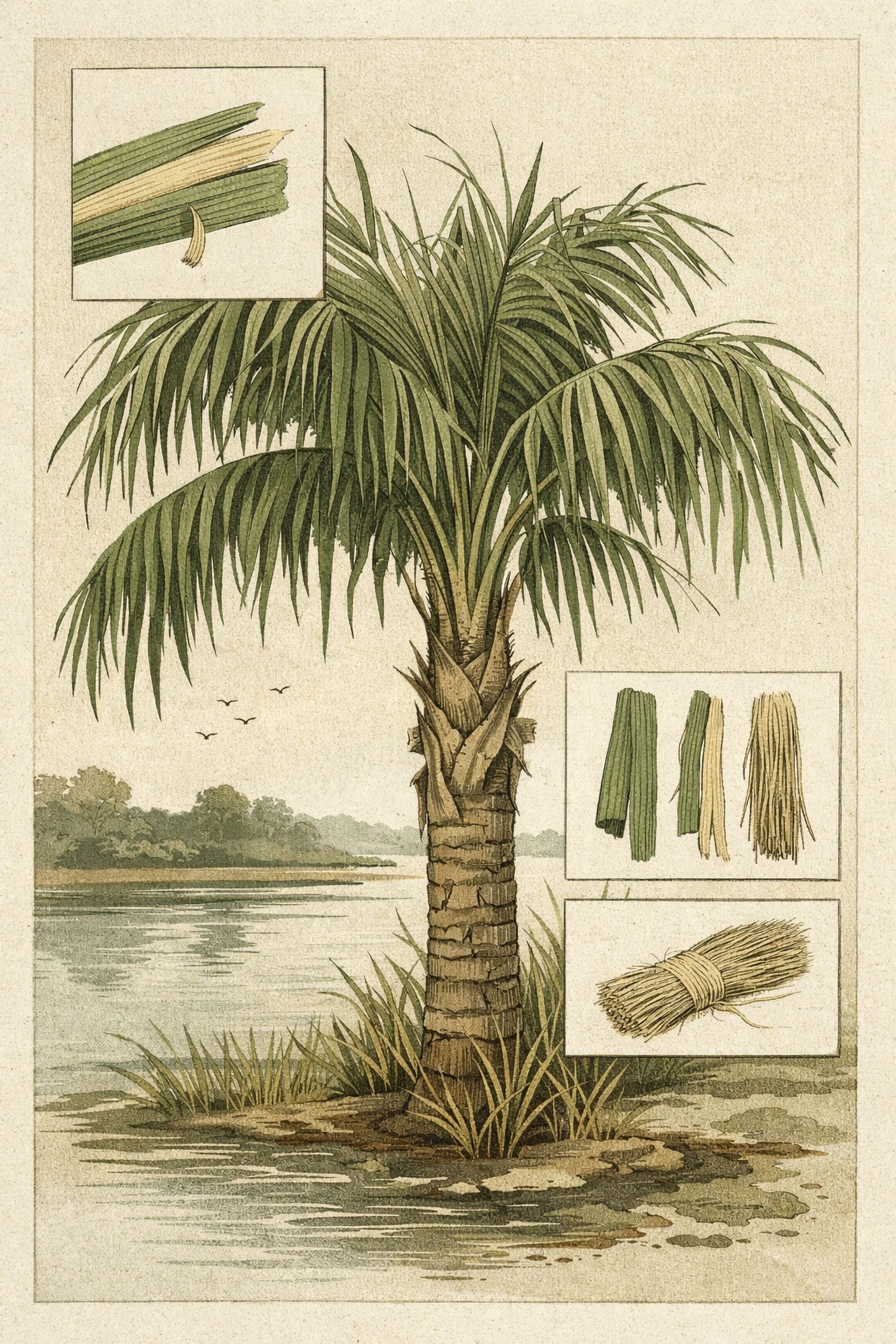
It begins where the soil holds water. Along riverbanks, in swampy ground, near villages that know how to work with what the land gives, the raffia palm rises with leaves so long they seem to belong to another scale.
The fiber used in bags, baskets, hats, mats, and woven objects comes from the leaf. Not from the trunk, not from the root. From the leaf, and more precisely from its surface: a thin outer layer that, once separated, dried, sorted, and worked by hand, becomes one of the lightest and most intelligent fibers in the world of craft.
That origin matters
Raffia is not an imitation of something natural. It is natural. It keeps the memory of the leaf inside it. That is why it bends the way it does, why it carries a dry sheen, why it can be soft without becoming weak. It is a material that does not hide where it comes from. Even when dyed, knotted, crocheted, or woven into a finished object, it still speaks the language of the plant.
In Madagascar, the work begins with restraint. A raffia palm is not stripped bare. Only a small number of leaves can be taken each year if the plant is to remain alive and productive.
This is one of the first truths of raffia, and one of the most important: it is renewable, but it is not endless. Its future depends on time, water, judgment, and the decision not to take too much. The fiber asks for a certain discipline before it gives anything back.
Once the leaves are cut, they must be handled with care. The leaflets are separated from the central rib. Then the useful layer is pulled away in long, narrow strips. Fresh raffia carries moisture and weight. Dry raffia does not.
Between the two lies a careful passage: cleaning, peeling, drying, sorting. It is not dramatic work. It is repetitive, quiet, exact. But the whole quality of the final material depends on this stage. Dry it badly, and the fiber turns brittle or uneven. Dry it well, and it keeps strength, flexibility, and a clean surface that can later be dyed or worked by hand.
There is a moment, after drying, when raffia begins to reveal what it can become. The strips are sorted by width, tone, and quality. Some remain close to their natural color, a pale gold with hints of straw and dust. Others are dyed. Raffia takes color well, but even in color it rarely looks artificial. It absorbs rather than shouts. Earth tones suit it best: rust, smoke, brown, brick, faded green, black. The fiber never quite loses its vegetal calm.
Then the material passes into technique. That is where the hand becomes fully visible. In Madagascar, raffia is transformed through methods that demand rhythm more than speed: crochet, plaiting, braiding, knotting, coiling, weaving. A flat strip becomes cord. Cord becomes surface. Surface becomes volume. A bag, a basket, a hat, a panel: these are not separate worlds. They are different answers to the same question. What can a leaf become when guided by skilled hands?
The answer is never entirely fixed. Good raffia retains slight variation. One strip may be drier, another smoother, another more luminous. One row may pull a little tighter, another open a little wider. This is not a defect. It is the visible record of making. Industrial materials aim for uniformity because they are built for repetition. Raffia carries repetition too, but not sameness. It carries small decisions. It carries adjustment. It carries the hand.
That is also why raffia holds shape in a particular way. It does not behave like leather, and it does not behave like cloth. It is lighter than the first, firmer than the second, and more alive than both. It can be worked into something structured without losing softness. It can feel airy and still remain resistant. It can carry summer light, salt air, dust, travel. Used well, it does not become decoration. It becomes architecture made from fiber.
In Madagascar, raffia is more than a material
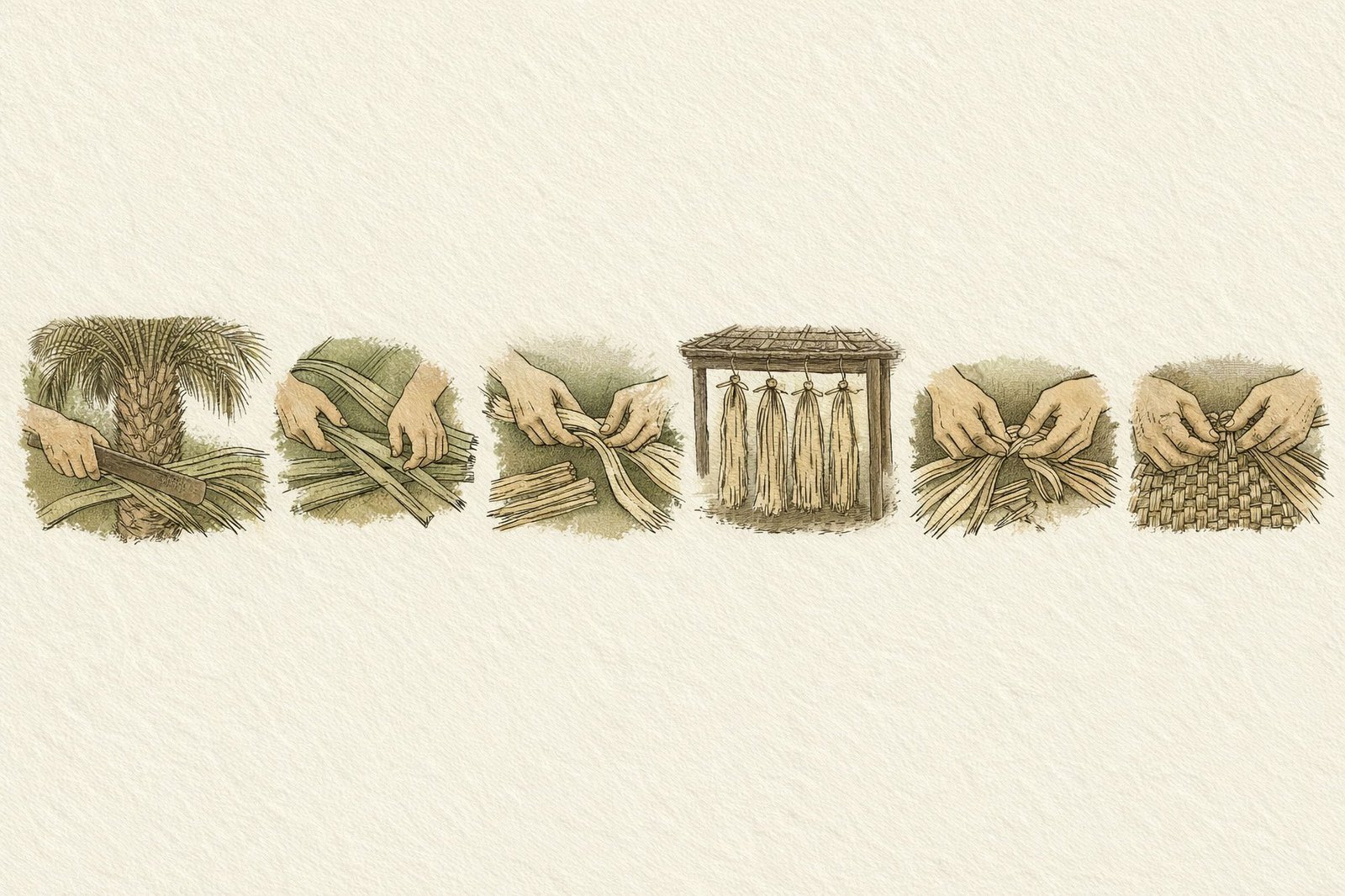
It is also local knowledge held in sequence. Harvesting. Peeling. Drying. Sorting. Dyeing. Knotting. Crocheting. Weaving. Finishing. Value is built step by step, close to the place where the plant grows. This matters. Too often, natural fibers are reduced to mood boards and seasonal language: resort, escape, effortless summer. The words are light. The work is not. Behind raffia there is a chain of attention, and the dignity of that attention should remain visible in the final object.
There is also a harder truth behind its beauty. Raffia grows in fragile environments. Wet ground can disappear. Landscapes change under pressure. When a material becomes desirable in distant markets, the risk is always the same: that abundance will be mistaken for permission. But raffia does not ask to be extracted without measure. It asks to be understood. A few leaves, not all of them. A craft kept close to the source. A pace that does not destroy the conditions that make the fiber possible in the first place.
This is where AFAR enters the story
For AFAR, raffia is not a trend and not a decorative gesture. It is a material with a place, a season, and a chain of skilled work behind it.
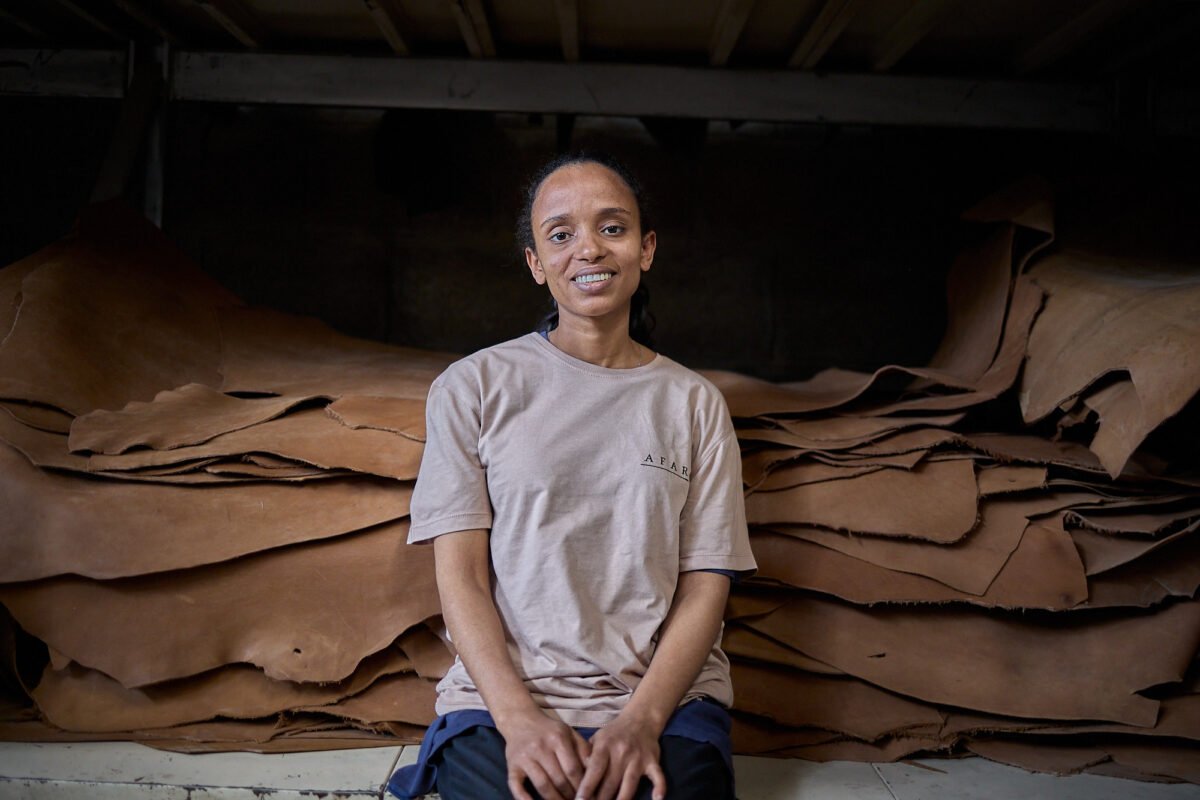
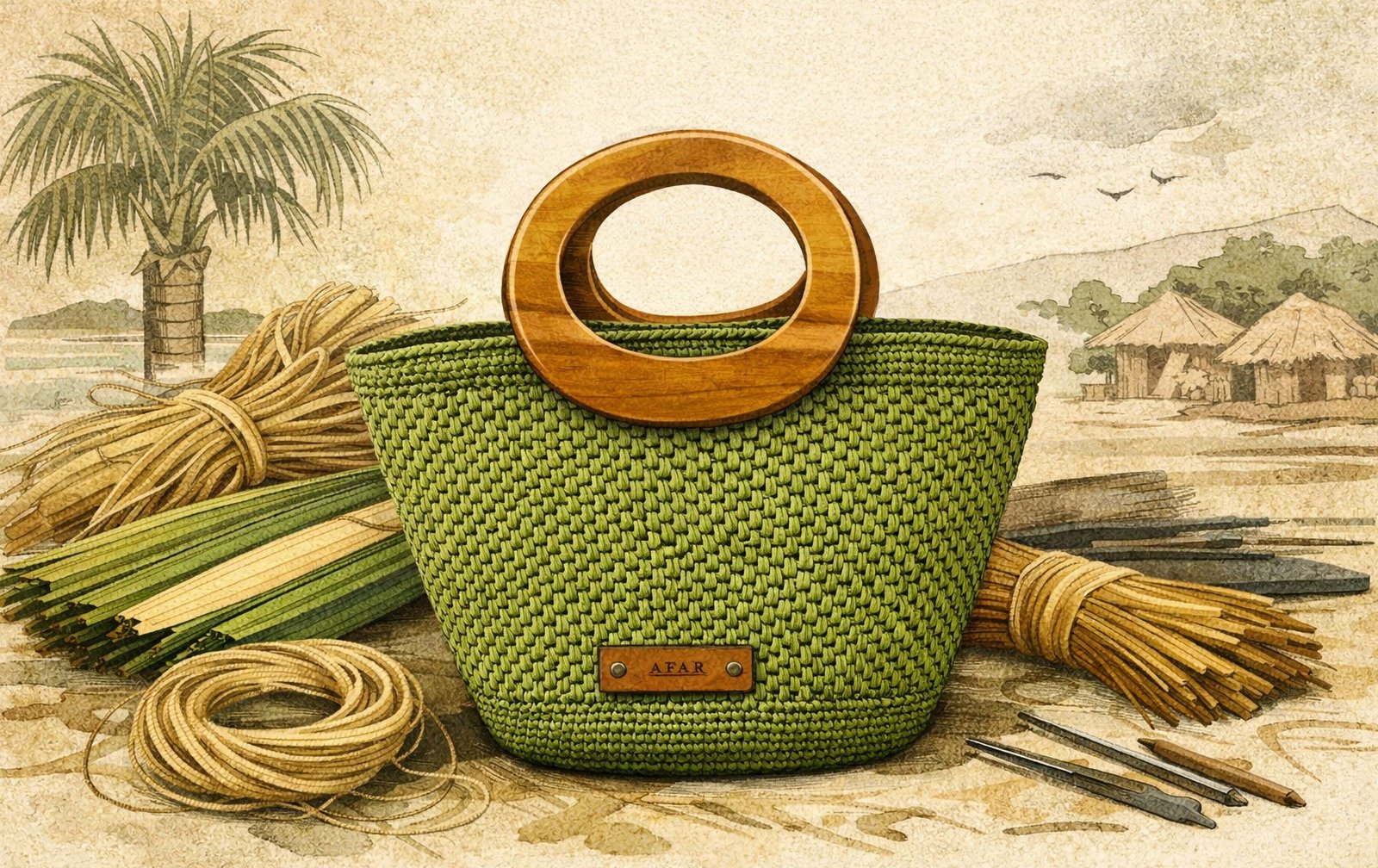
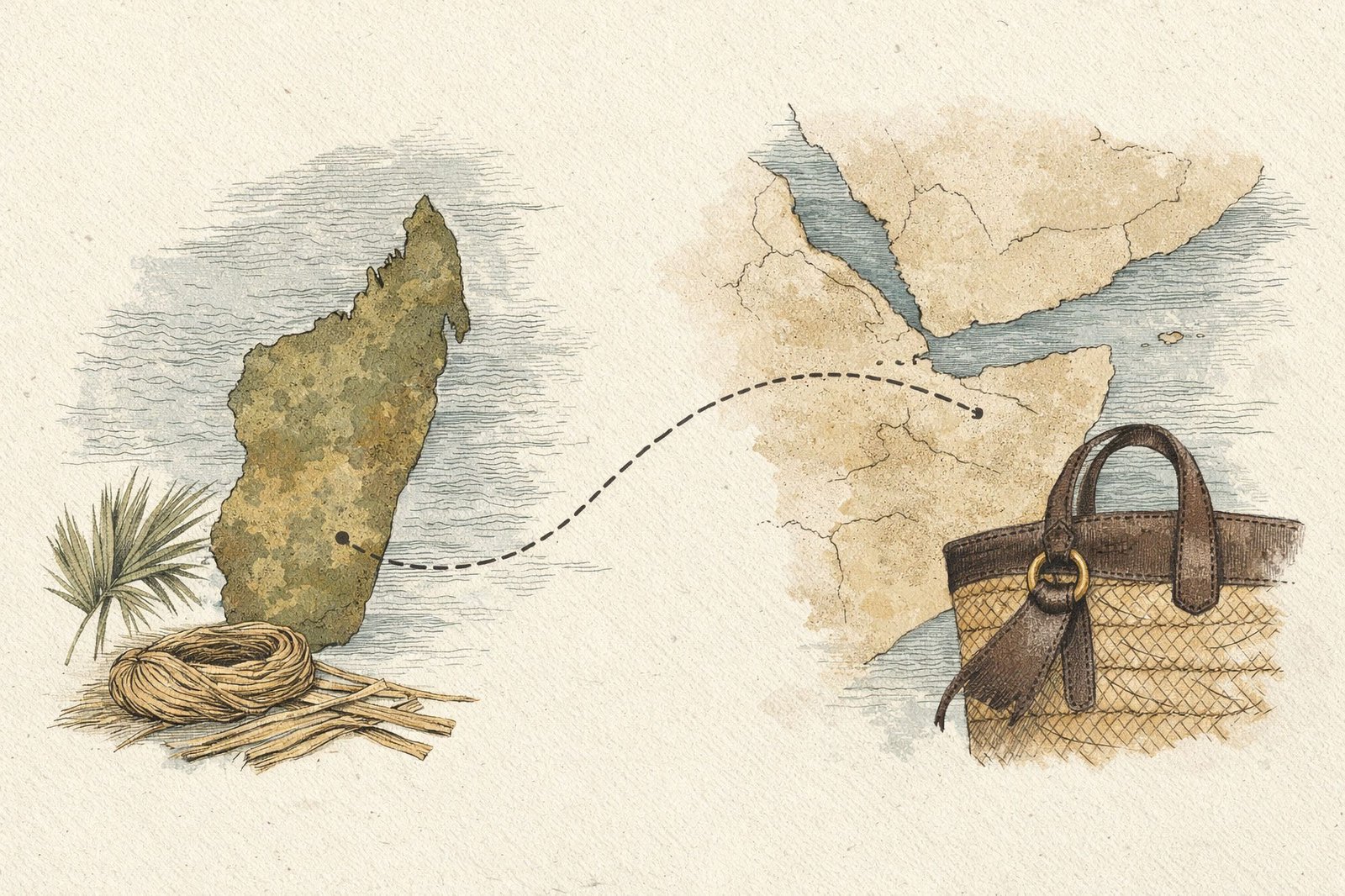
The fiber begins in Madagascar, where it is harvested and prepared by hand, then continues its journey to Addis Ababa, where AFAR’s artisans complete each bag with vegetable-tanned zebu leather, horn details, and hand-finished construction.
What arrives at the end is not just a summer object, but a long conversation between landscapes, materials, and makers.